Sarika Mehta
Sarika Mehta
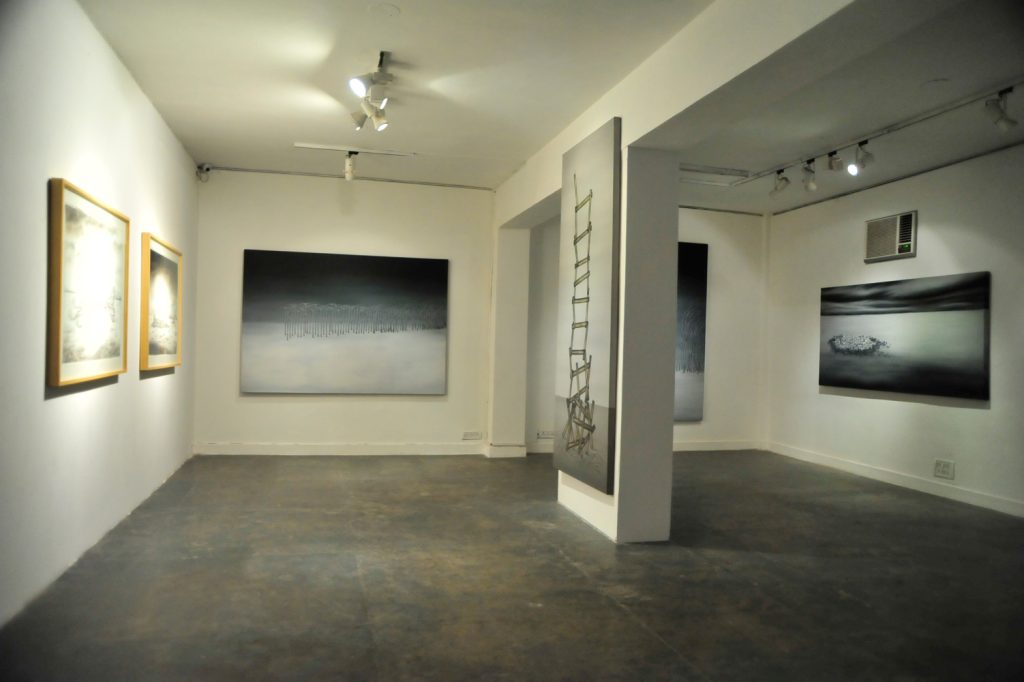
New Delhi: Bhavna Kakar, Director, Latitude 28, presents Ahmedabad-based Sarika Mehta’s debut solo show titled Born from The Terrain at Latitude 28, F-208, Lado Sarai, New Delhi from April 10 to May 20, 2013, 11 a.m. to 7 p.m. Phone @ Phone @ 46791111.
The title of the show according to the 33-year-old artist alludes to the fact that “something that can grow in a desert, cannot grow in a forest. In my work, for instance, what I am showing as landscapes does not have any name. It is born from the terrain. It’s surreal. It’s my first expression. Nature is also born from the terrain.”
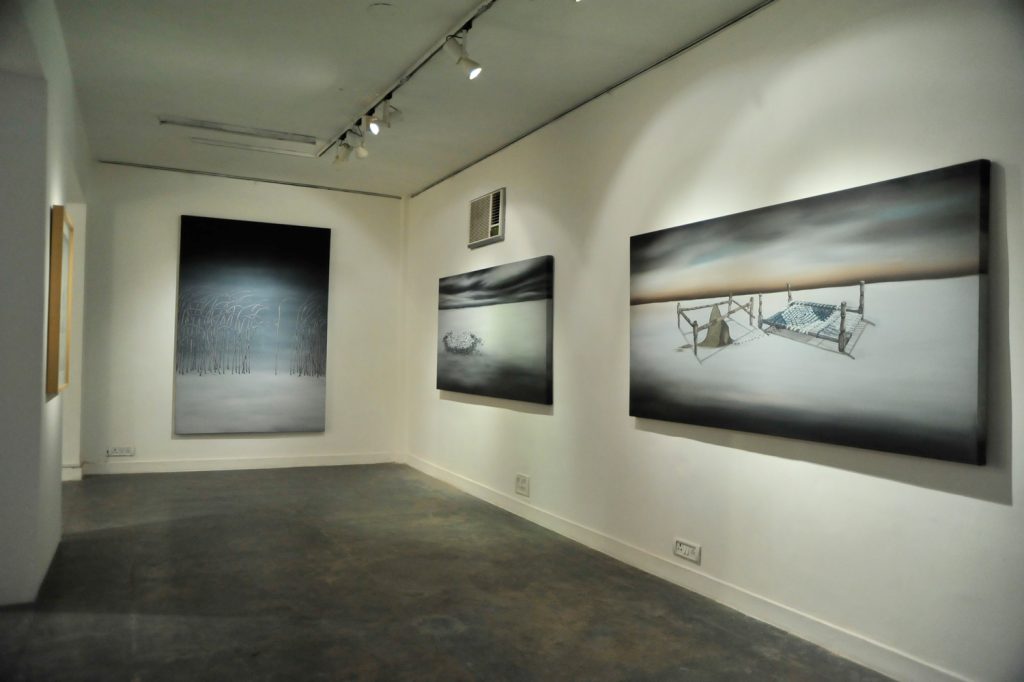
The show includes six oils on canvas, two pencil drawings on art spectrum paper, eight pencil drawings on rice paper, three watercolours and one installation.
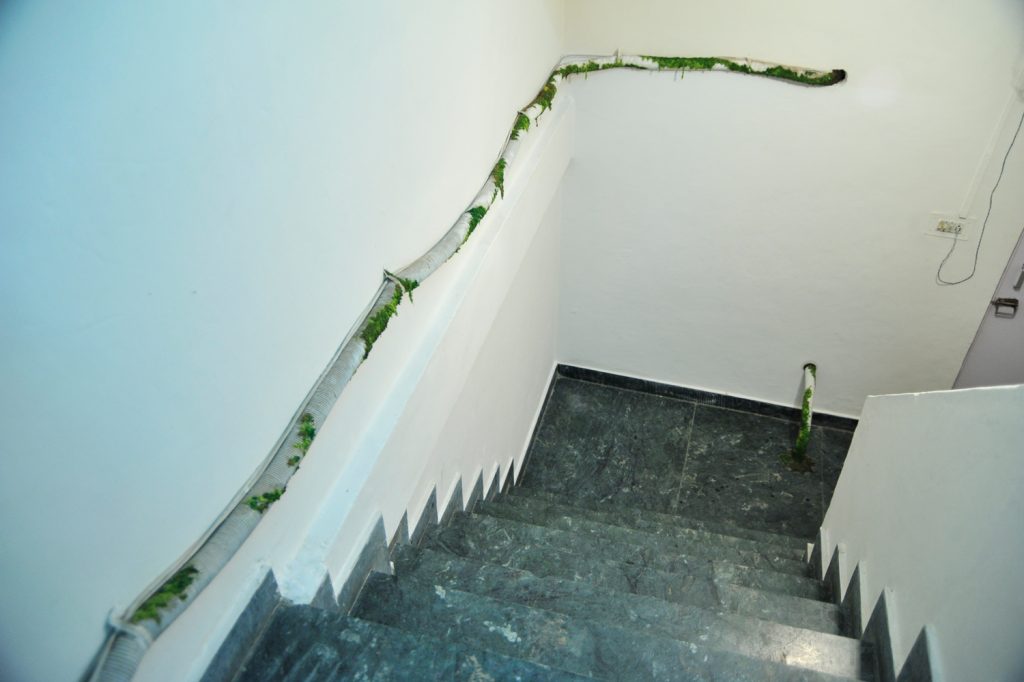
Says Bhavna Kakar, Director, Latitude 28: “Mehta is a promising, young artist whose journey parallels her apprenticeship as a printmaker and her gradual shift to painting. But what makes Mehta’s work important and thought-provoking are the possibilities she offers in understanding the present psyche of man and our environment. Her work forces us to ponder about demography, dying human settlements and the debris of the past which is long lost gone and are endangered. For her installation, she has used an unusual setting, the hidden corners of the winding staircase which will come alive with an algae-like composition.”
Born in Ahmedabad to an architect-businessman father, Mehta completed her Diploma from C.N.College of Fine arts, Ahmedabad in Painting in 2000, and then worked in a studio space at Kanoria Centre for Arts. In 2004, she did her post diploma in printmaking from M.S.University, Baroda and started working at Priyasri Art studio while living in Baroda. She shifted to Ahmedabad in 2007 after marriage and her first solo show titled Pulled out from the roots in 2008 at Galerie Mirchandani + Steinruecke, Mumbai was a much deserved launch pad. “That was the first big break for me,” says Mehta, who consequently participated in an artist residency program in printmaking at Jean-Yves Noblet Contemporary Prints Studio, New York. Her last solo show was called A Fragile Storm that was held at Lemongrasshopper, Ahmedabad and in M.S.University, Baroda in 2009.
“Our generation is characterized by living patterns of noise, din and clutter. l intend to understand and decipher these patterns. The attempt would be to churn out a silent order out of this chaos, to try and unfold the mundane layers of everyday life to reach the silence in between each layer. Hence, searching the truth within is my inspiration. Thus, my visual vocabulary is centred on the reflection of emotions, struggle, fear and the burden of responsibilities in day to day life.” she says.
Her works are sparse and untitled too. “I like space in my work because it gives my work a ‘restful’ feeling. Also being from a Gujarati family where the natural instinct is to control the girl, I have always wanted space for myself and that shows in my work too. And they are untitled because so many times, I don’t like to restrict the viewer to see the way I see my work. I want them to see my work beyond the boundaries.”
“My conscious effort has been to make art lighter, look at issues deeper and specific to human space, and understand the problems that reflect in our day to day life and somewhere also offer an individual perspective to those issues.”
Mehta’s paintings reflect an enchantment with space and the silence within them. “At the same time, I untangled the subtle, finer details of everyday objects. This made me realize that a single object suspended in eternity became powerful enough to capture its own essence.”
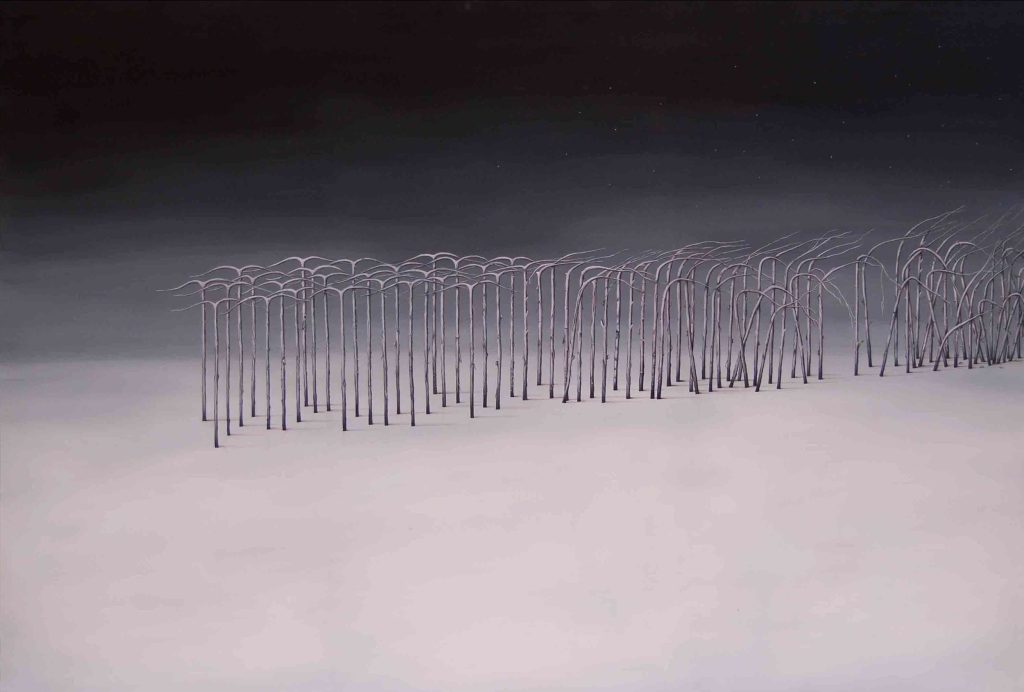
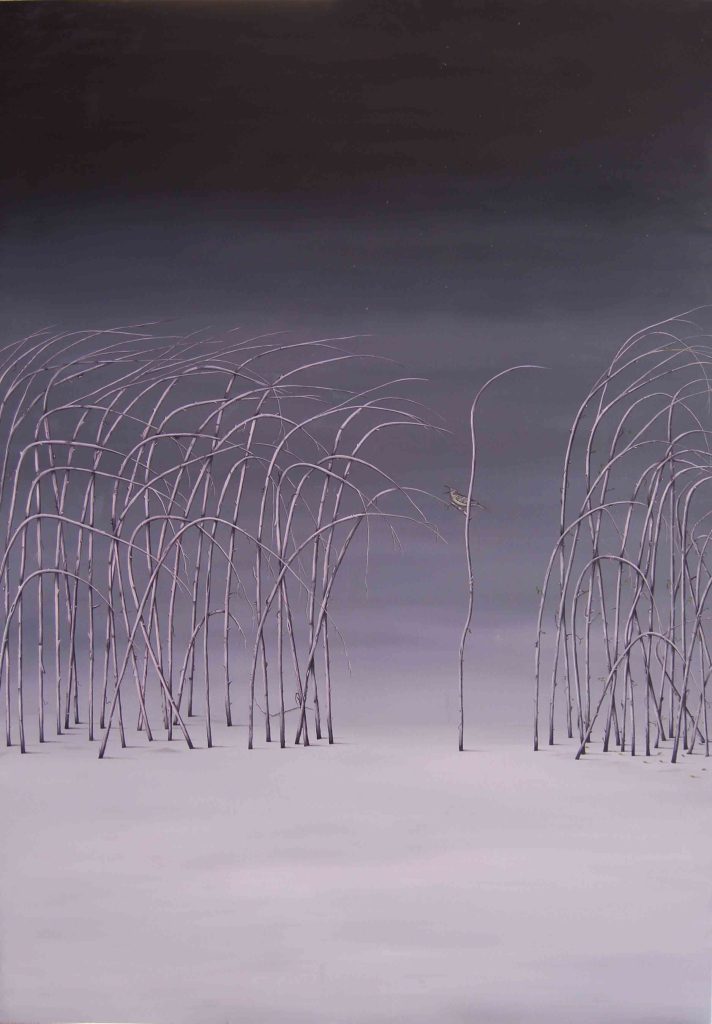
For instance, her works depicting a row of roots and a solitary bird derive inspiration from their own silence and wildness. The background and foreground lose their individuality and exchange places to create the poise. Solid objects like sticks, leaves and bird decompose themselves into subtle vibrations within and beyond the work. “The thought behind these works is that everything is stable till you mess with it, and suddenly it becomes beautiful when it is most unexpected. It is a start, it starts to flow freely and openly like a bird. It’s like discovering one’s individual entity in the middle of thousands of faces.”
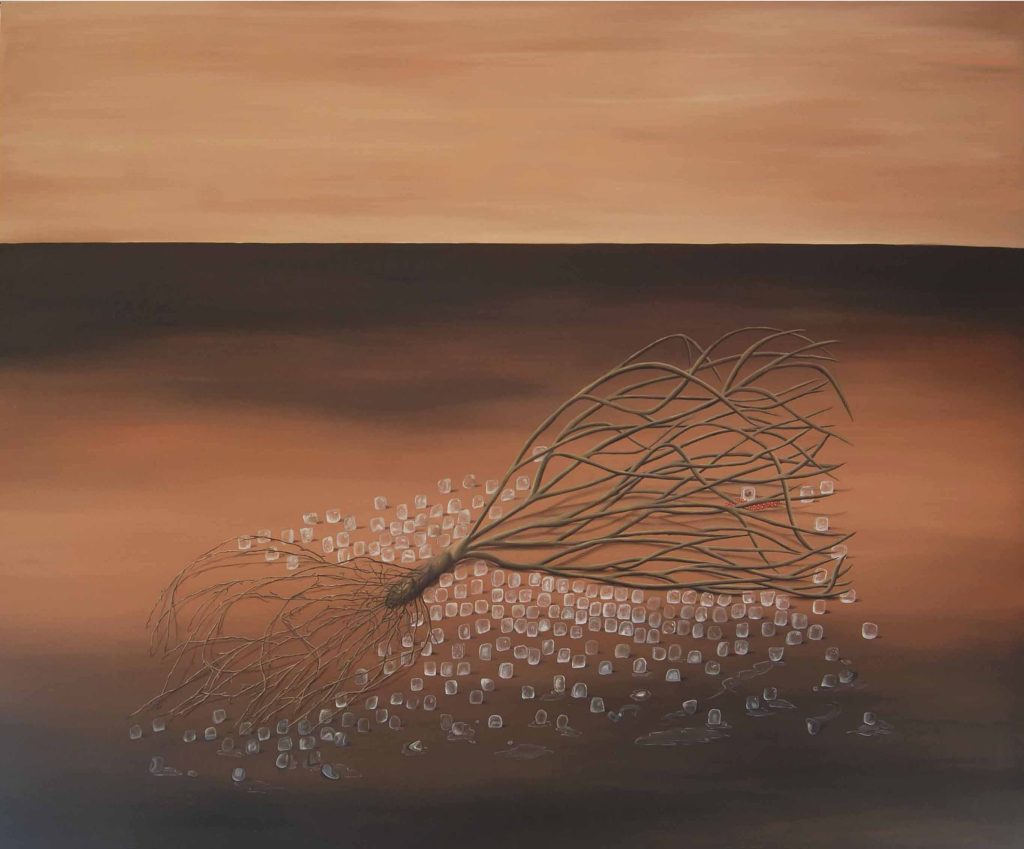
Another work that depicts a bunch of decaying roots amidst melting ice cubes is about the fact that beauty lies in everything. One just has to have an eye to see and feel it. “Roots are so deep rooted that one cannot separate them. Hidden but loud. Individual yet connected. Talking about the real and yet ignoring the metaphysical world.”
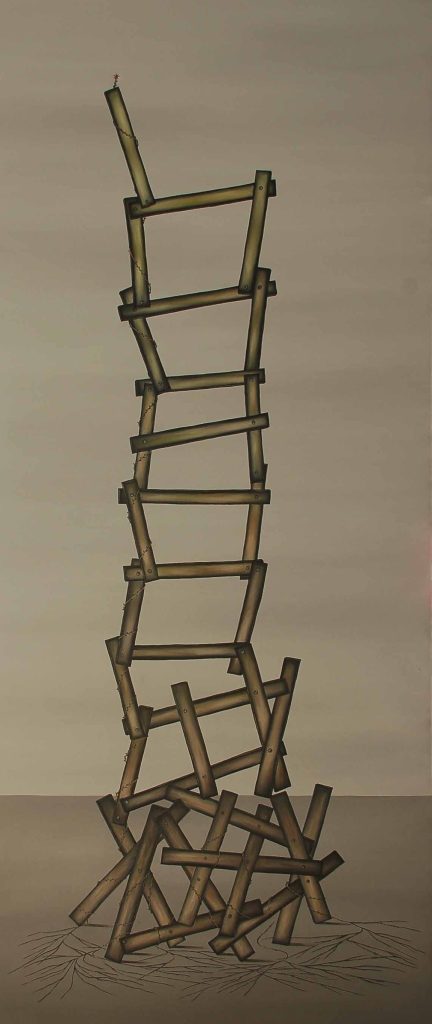
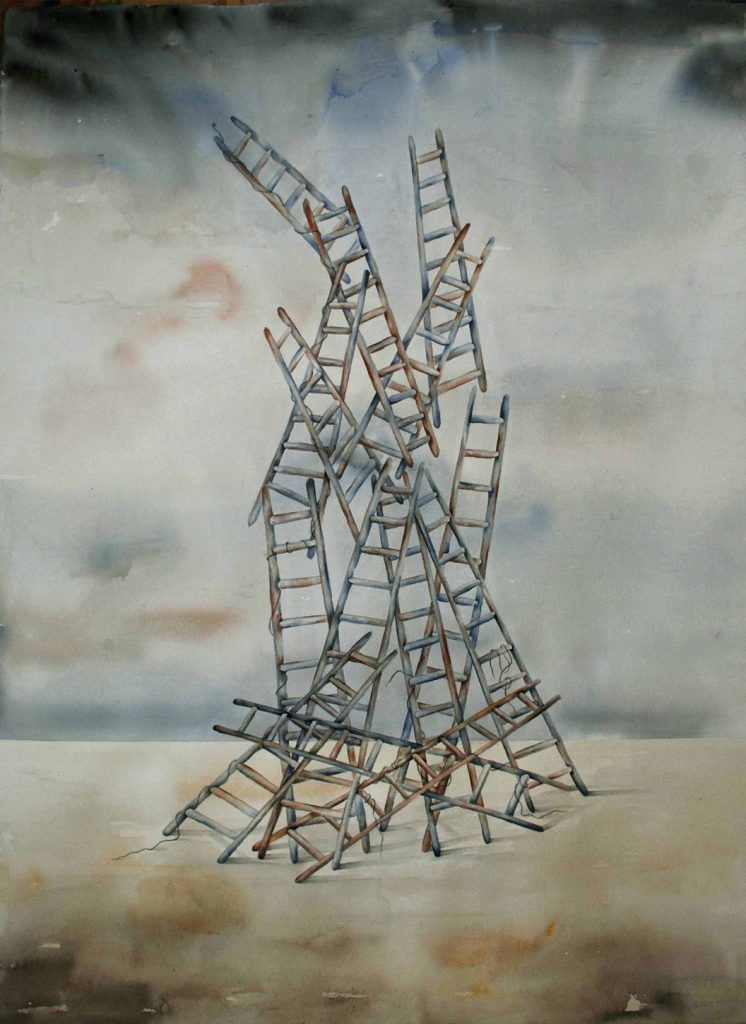
In a work depicting a ladder, the starting point becomes the ending point and the ending point becomes the starting point. “I strongly connect with the fact that in the current social, political and psychological scenario, we are no longer growing up with a sense of freedom and lightness but are instead living as a captive soul. Each morning we wake-up, our thoughts clouded with tension, panic and the heavy feeling of claustrophobia. But if we can see the beauty behind it on a closer look, one observes that every individual space is talking about its own hidden stories in the same frame. And that leads to a beautiful starting point.”
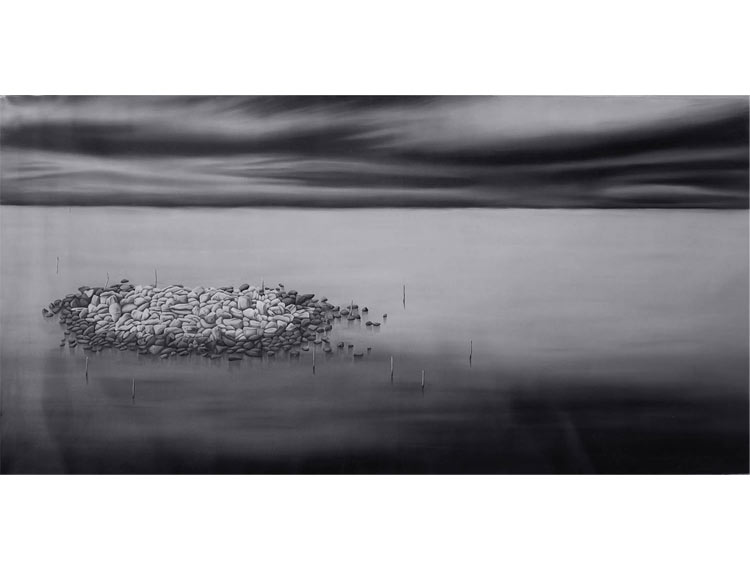
In one work that shows a heap of stone arranged carefully on a water-like body, Mehta alludes to the fact that our generation is characterized by living patterns of noise, din and clutter. “In this crowded space, I intend to understand and decipher these patterns. The attempt is to churn out a silent order out of this chaos, to try and unfold the mundane layers of everyday life to reach the silence in between each layer. Stones are hard but when you put them together they become lighter. In this black and white background work, there’s a tinge of yellow and green on two blocks which is visible only if observed closely. Be it the nostalgia or celebration of the past, or a moment of experience. To be and not to be in those spaces is almost surreal in itself.”
For her work depicting a charpoi and an anthill crawling with ants, the inference is of things that are hidden but lurk below the surface. “At a glance the objects in this painting might seems still. But on a closer look, a charpoy weaves tapestry of hidden stories and like an anthill brim with micro activities as represented by the movement
of ants. Ceasing to be merely objects, these motifs become active subjects-individual yet connected, embodying the metaphysical yet remaining within realm of the real.”
Apart from these paintings, Mehta is also making a site specific installation that will flow like an algae-like form around the airconditioning pipes in the gallery staircase. Titled Flow, the installation will be made from wet towels painted with oil pigments and is a reference to the emotions that are raw and untamed and spread like algae. That one must not believe in repressing or suppressing or containing.
Most of Mehta’s works are in muted shades as she feels that with such shades, “all the unnecessary things just go out from my inner space and what stays is what I can relate with most. It’s a zen thought which says that as you try to minimise things, only what is most important remains.”
Mehta’ paperworks, full of playfulness and spontaneity, are equally muted and sparse in their appearance. Her works have a tactile feeling, and that is how she mostly begins herself. “I like my objects in front of me to touch and feel them. If I can bring my object in my studio, I always do. Stones, sticks, sand, ladder and natural things will always find a place in my studio. I love to go to my object, live with them, observe them and understand their character.”